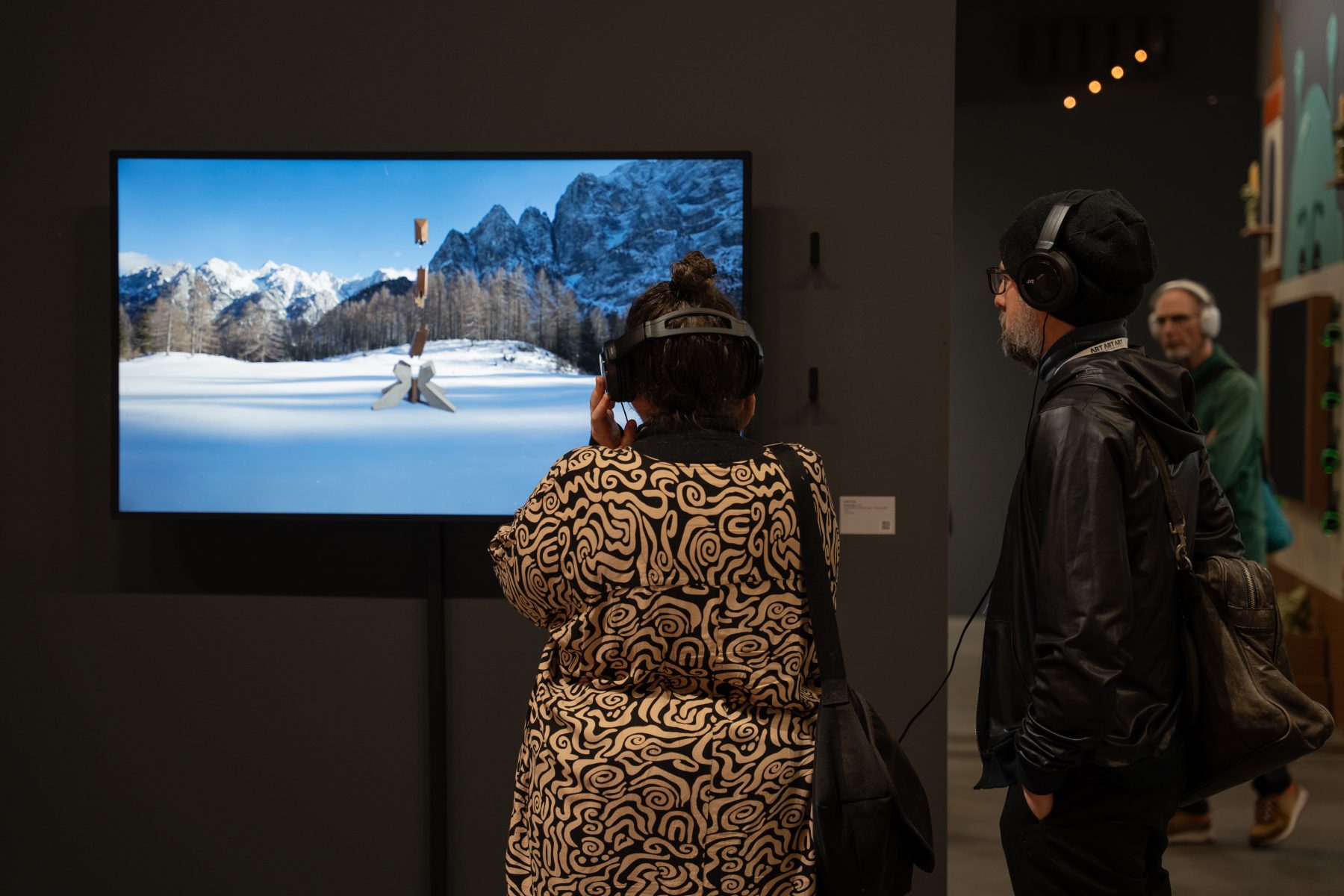
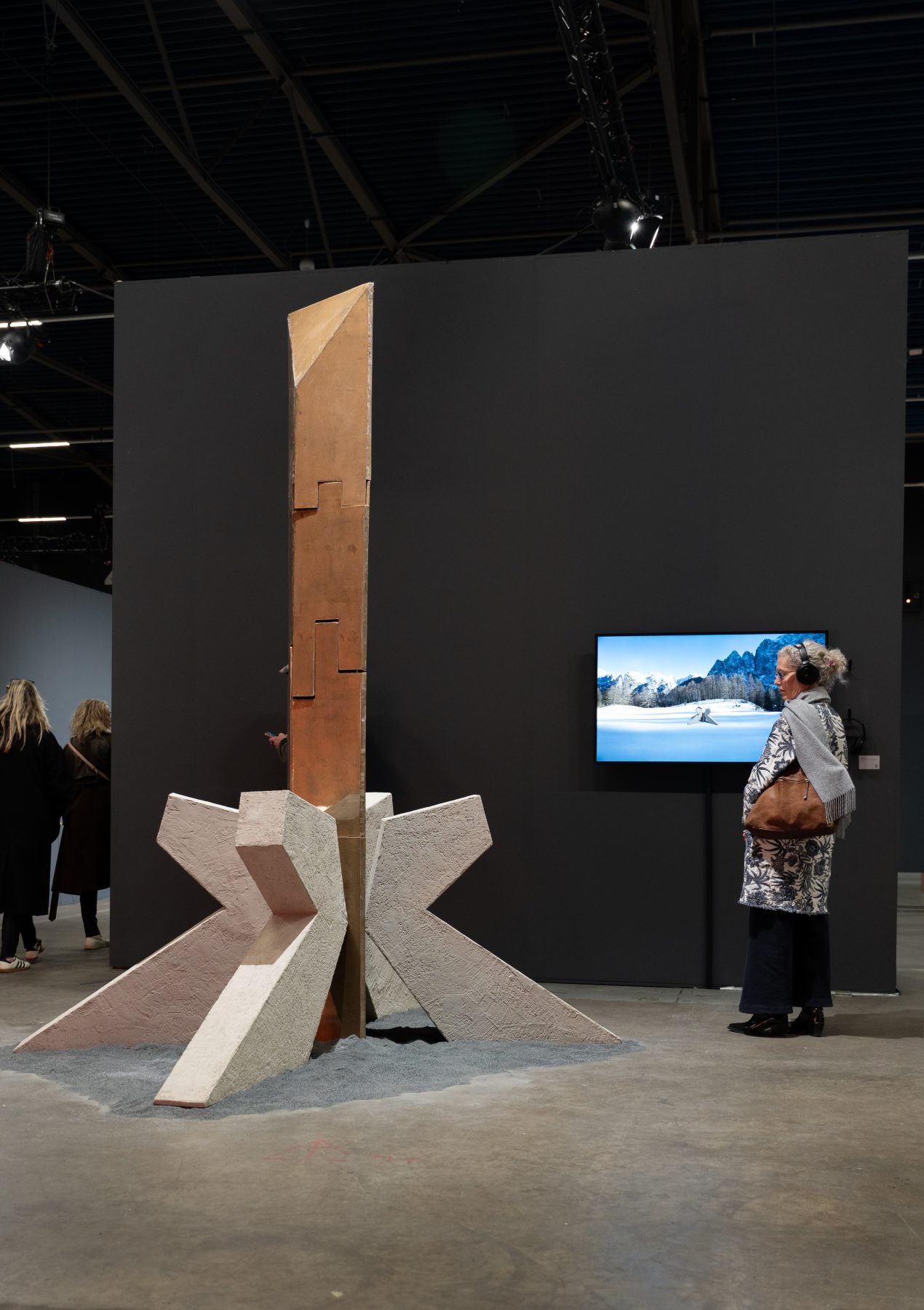
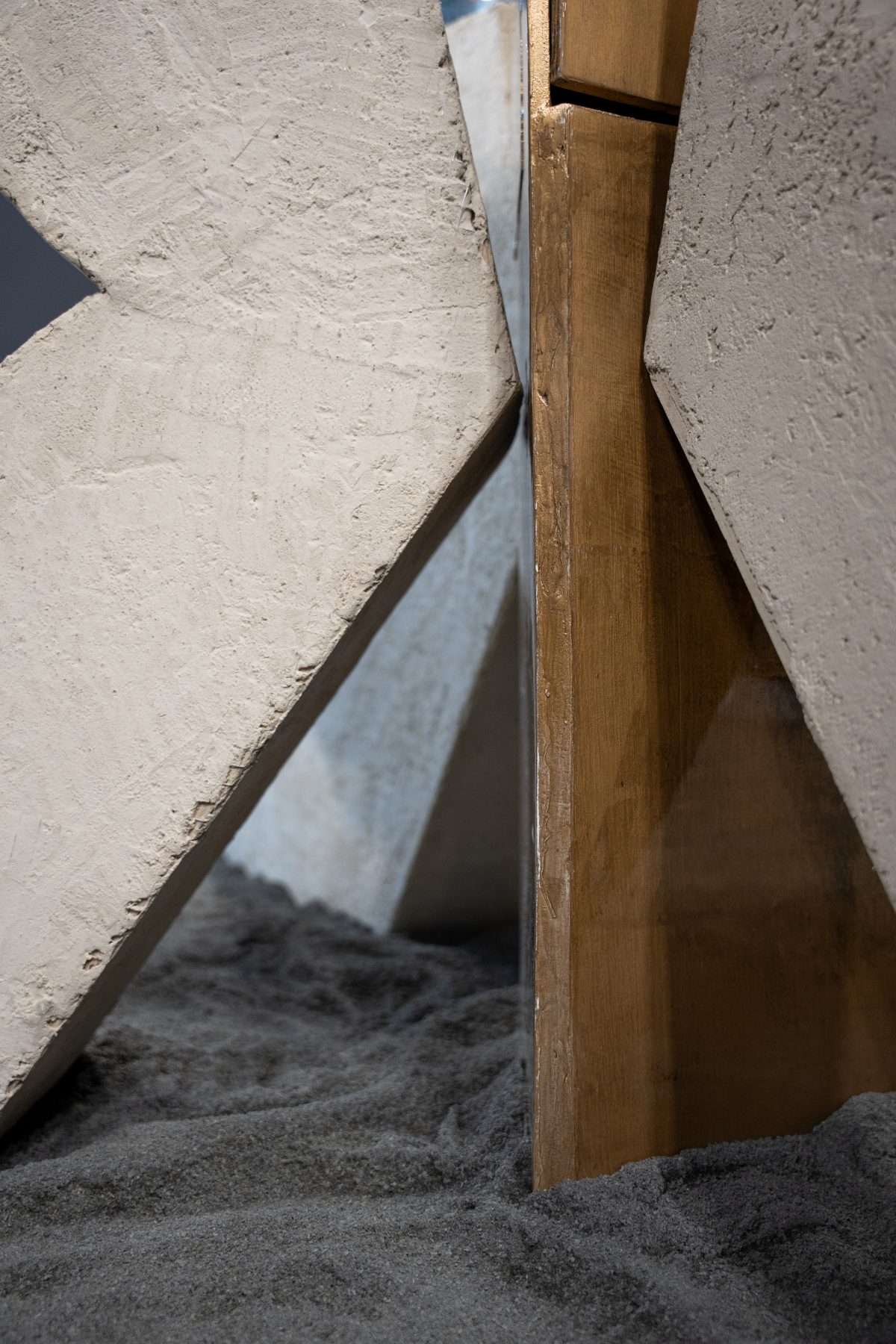
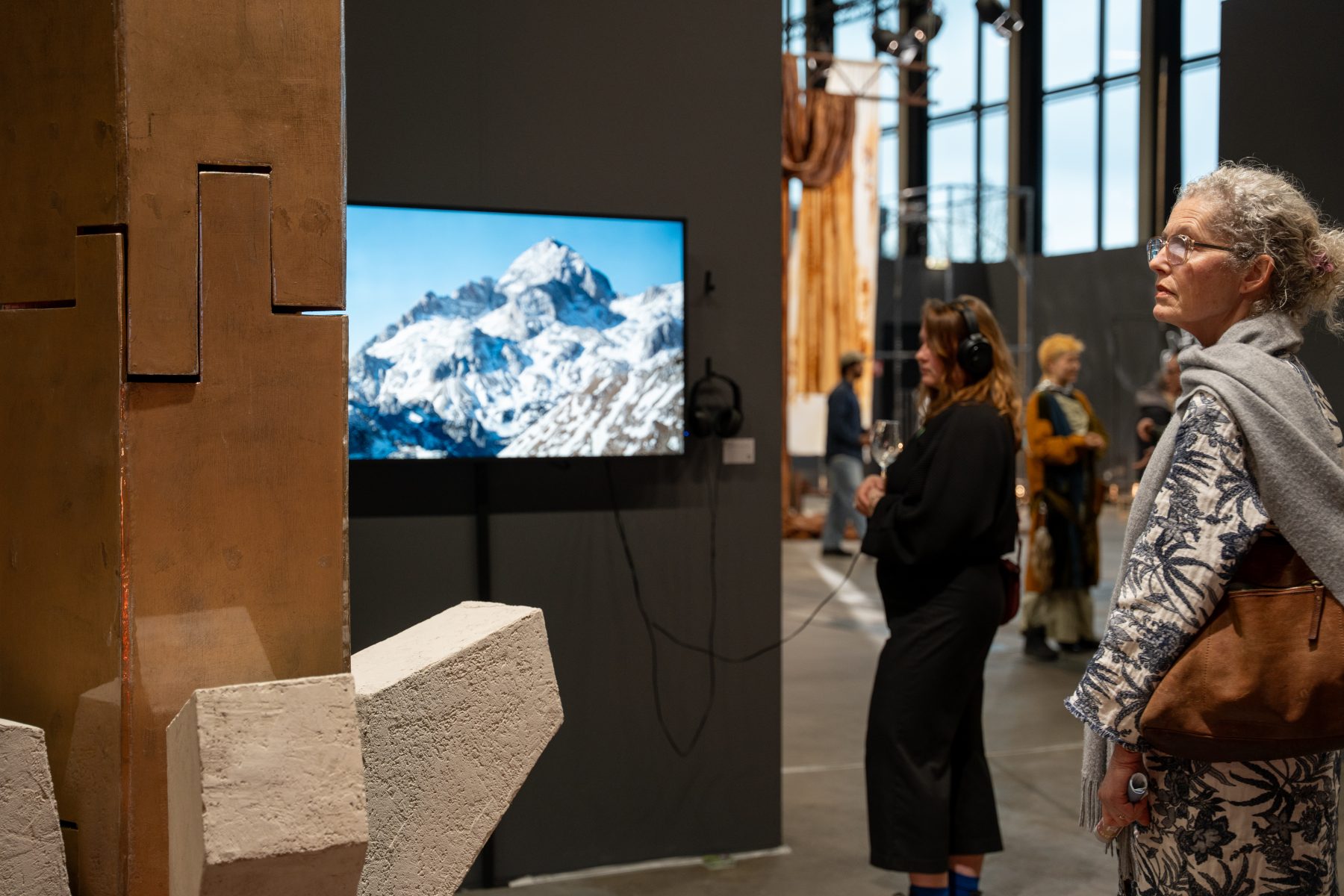
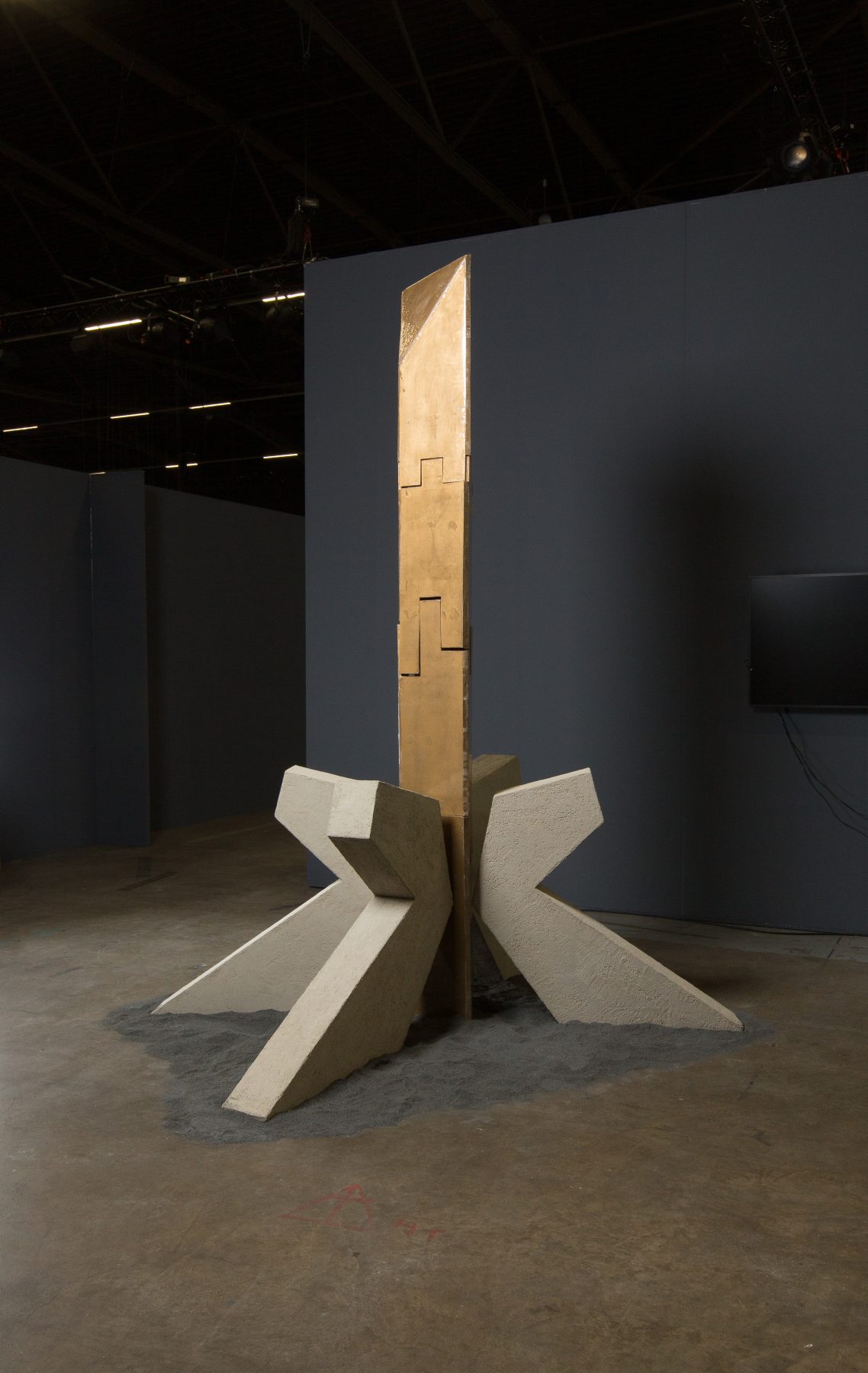
Glory Days
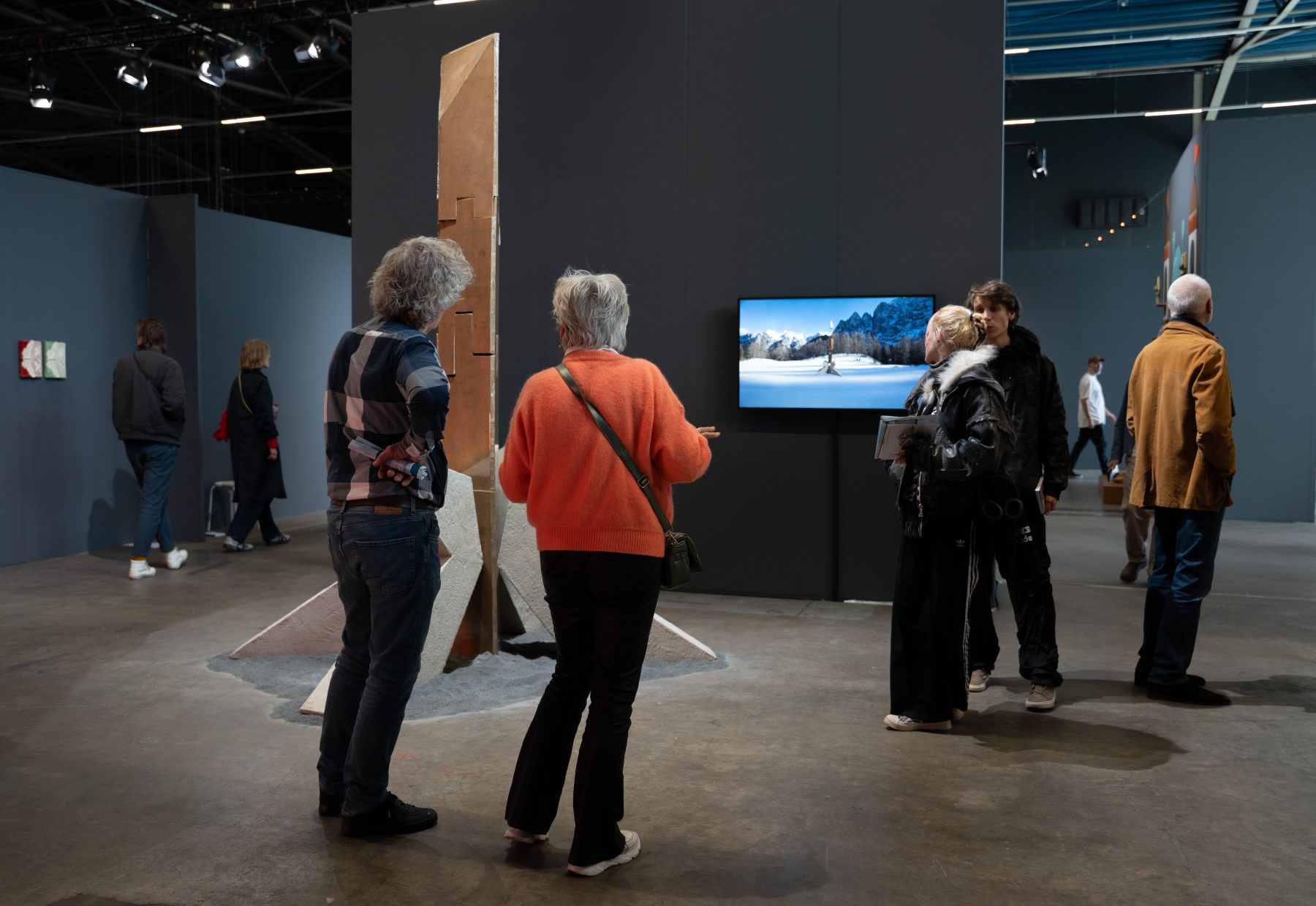
mixed media sculpture (300 x 250 x 250 cm); video (5’ loop)
2025
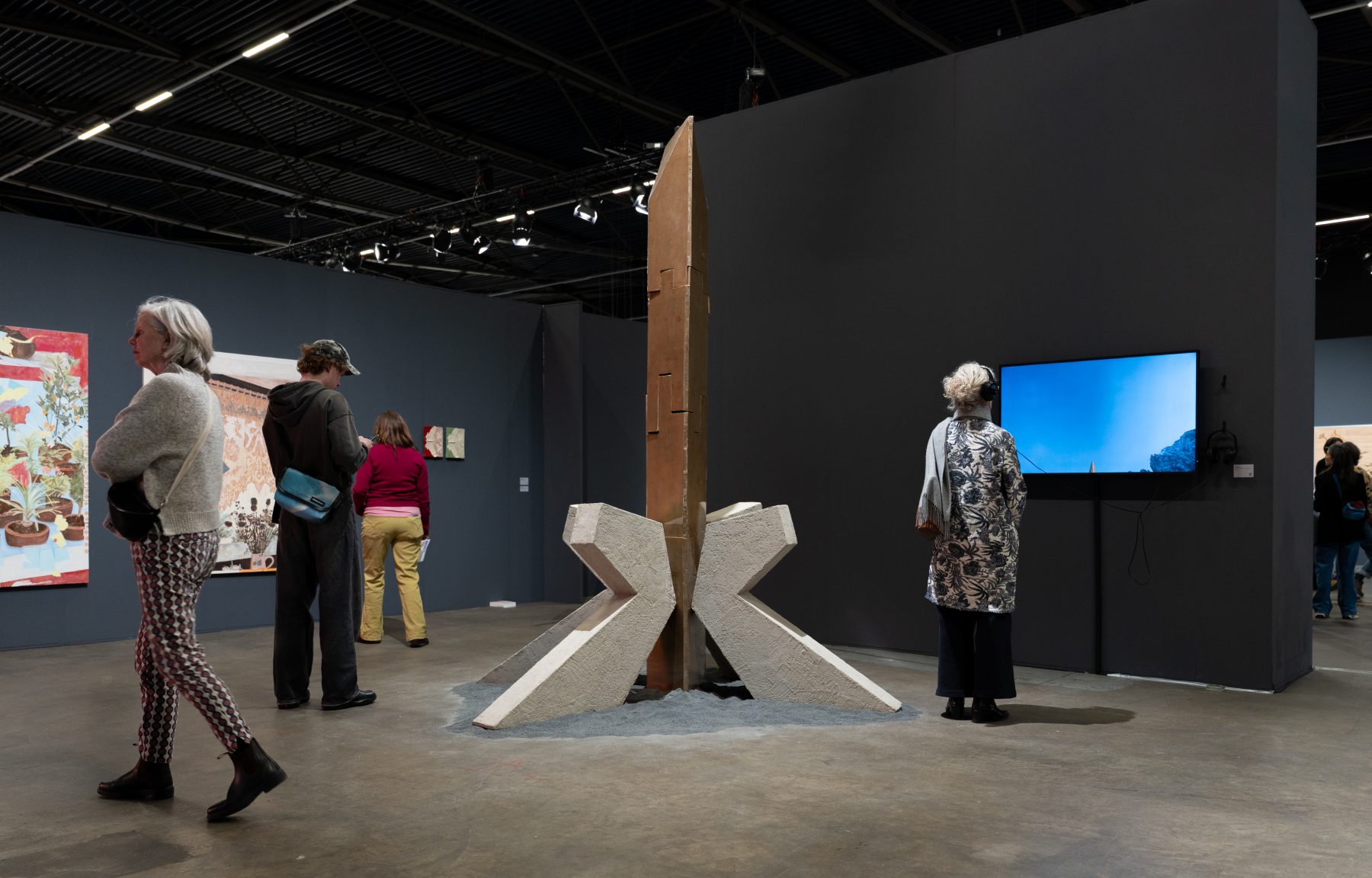
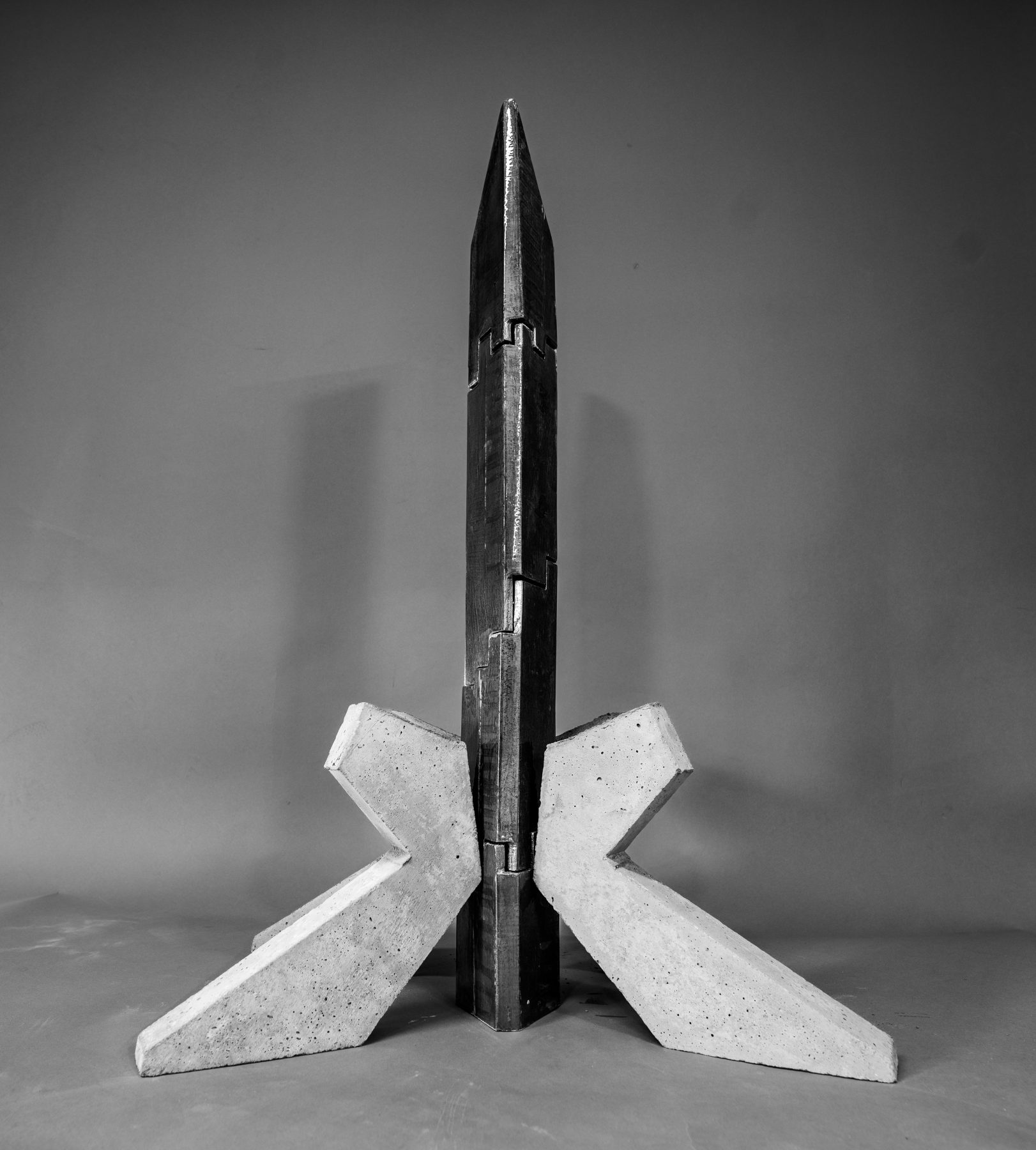
The installation Glory Days explores the impact of history through inherited memory. It combines the Yugoslavian heritage of Socialist Brutalist monuments with the intimate history of my own nostalgic experience. Born in 1993, in the independent republic of Slovenia, I missed the Yugoslavian era but experienced it second-hand through older generations and family. To what extent has its history shaped me?
Slovenia shares the socialist legacy—a legacy the nation still debates. On the one hand, this legacy represents an idealized nostalgia; on the other, a traumatic past. This collective ambivalence highlights the power of ideology held over a nation.
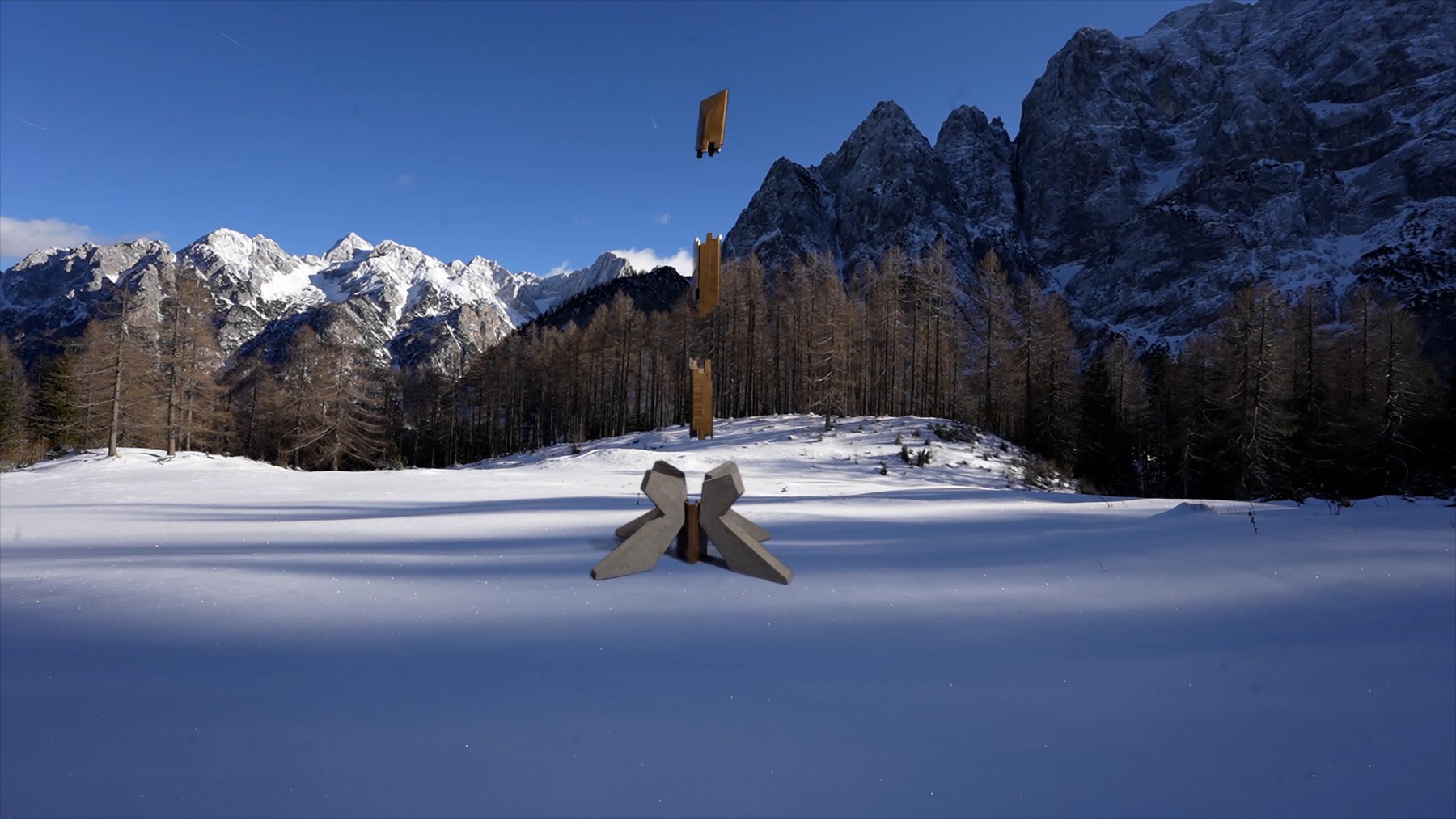
Glory Days could be seen as an ironic monument—a memorial outside of time that questions which narrative to believe. In the video work, the monolith transforms into a sci-fi looking body, ironically transcending even the scale of post-war socialist monuments. The influence of (questionable) belief systems and their long-lasting impact on collective identity lie in the core of Glory Days.
[…] The fact that she uses words like ‘ironic monuments’ indicates that there is a healthy suspicion in relation to concepts like identity, history and time. There are facts and documents, stories and artifacts, but Urša is mostly interested in the spaces in-between: unwritten and unchartered territory. That is where new possibilities are to be found: new histories, altered identities, different time-scales.
[excerpt from upcoming publication (UDC-Publishing): Timekeepers, 2024; written by Paul Segers]